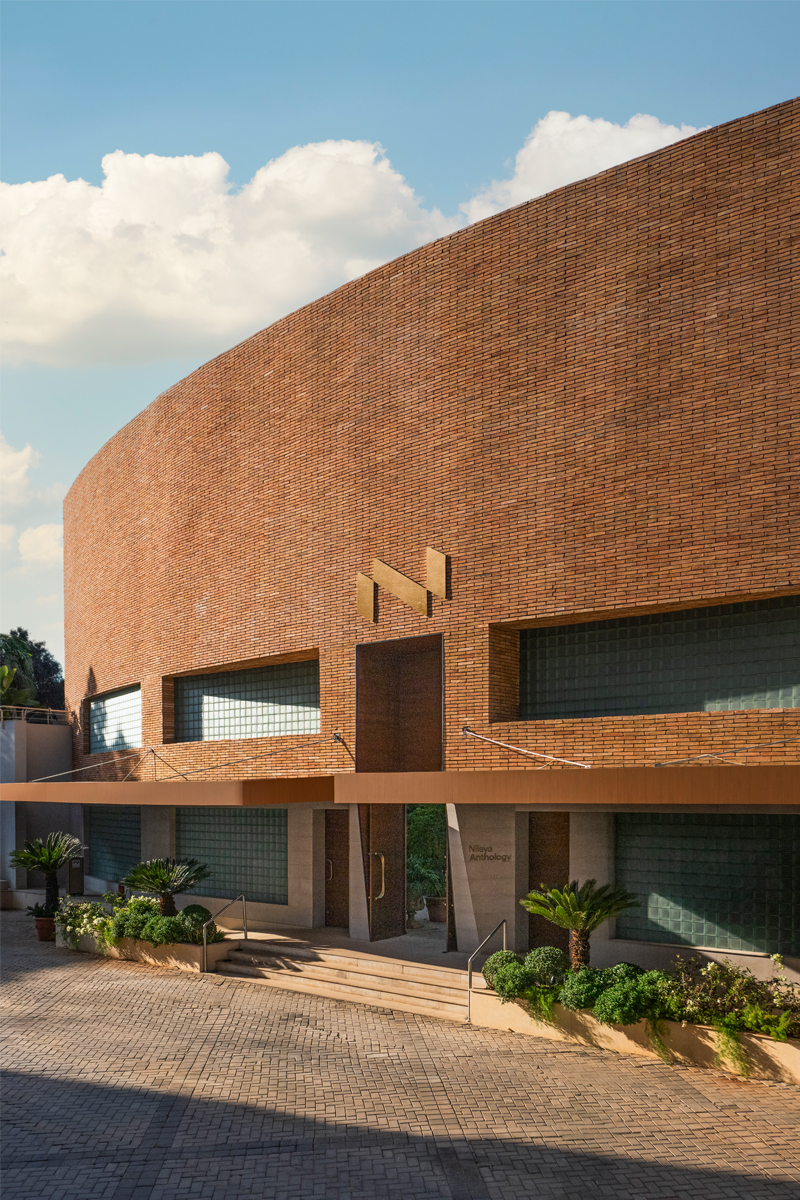
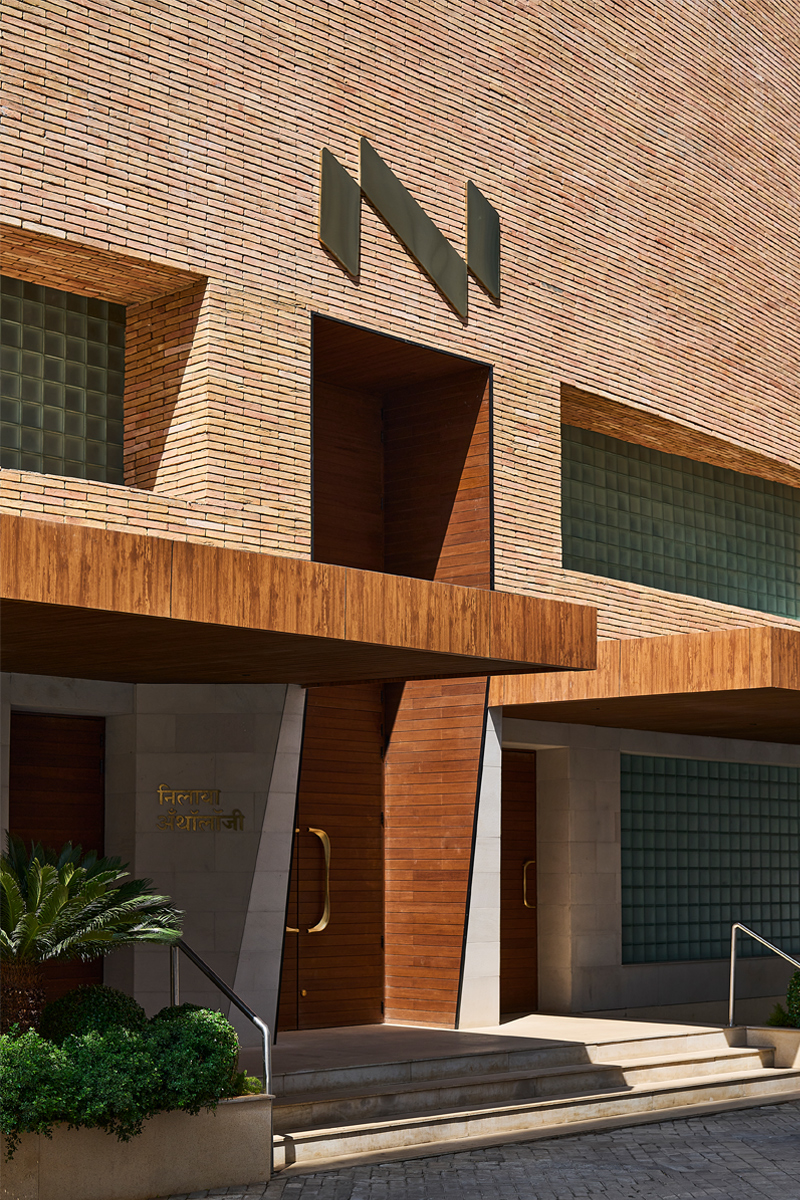
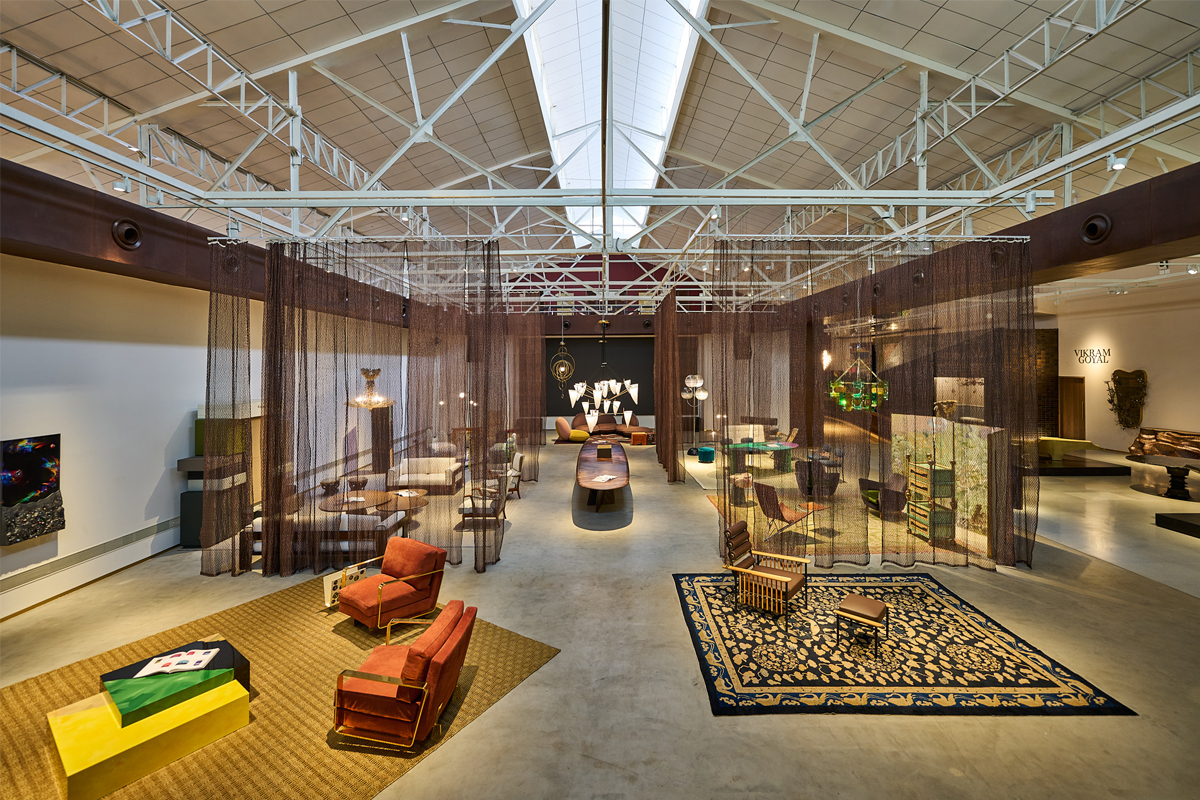
One of our largest architectural projects to date, Nilaya Anthology is a 100,000-square-foot design gallery-cum-retail space showcasing a curated selection of international and homegrown labels in Mumbai. Inaugurated in March 2025, it is representative of Asian Paints’ first foray into the luxury market and consists of two distinct structures: a 40,000-square-foot warehouse with a double-height ceiling and a pitched roof, and a ground-plus-one structure spread over approximately 55,000 square feet. These two clearly defined buildings were concepualised as the figurative 'heart' and 'mind' of Nilaya which, in its entirety, is designed to evoke a sense of openness and discovery.
The Orangerie
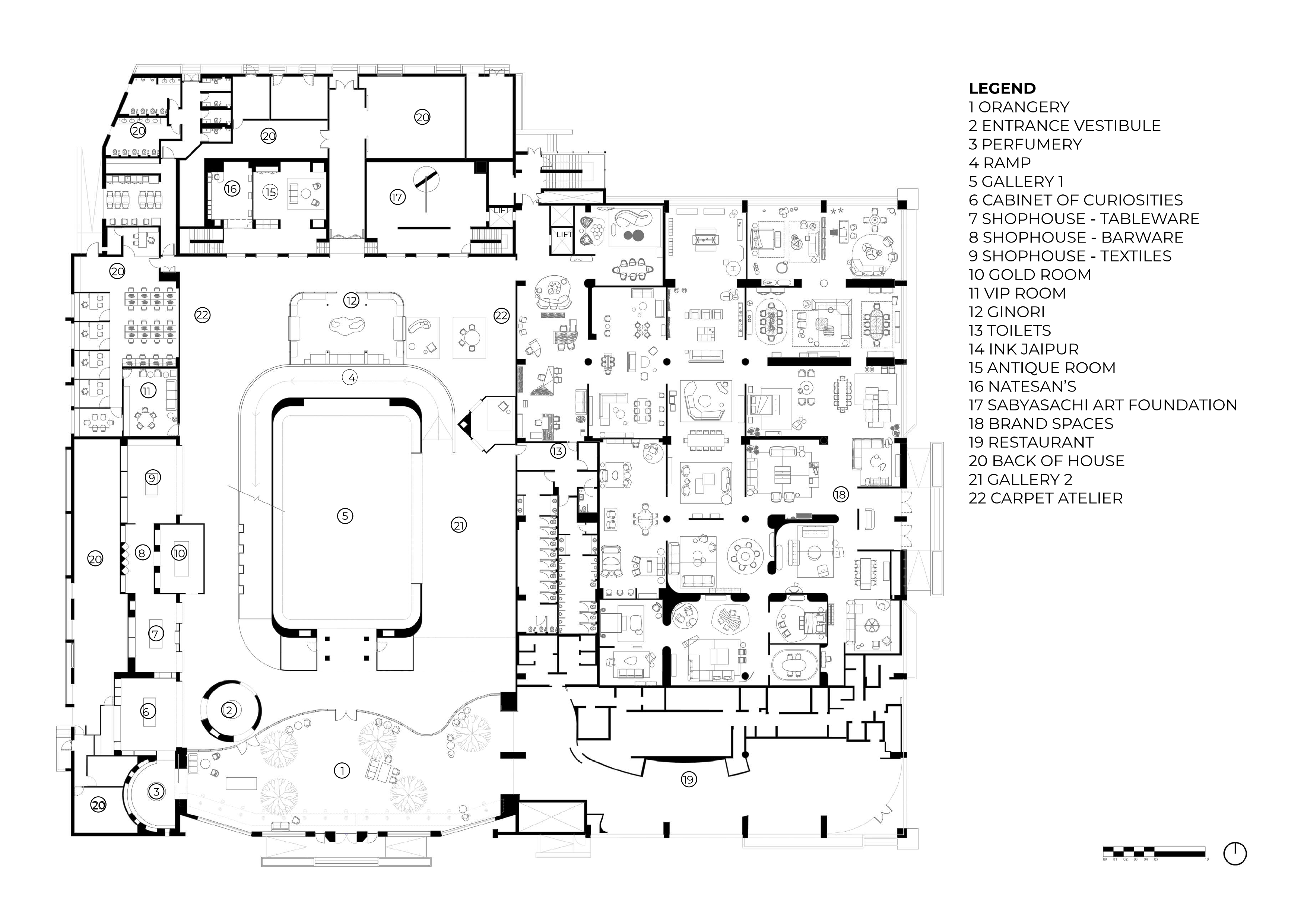
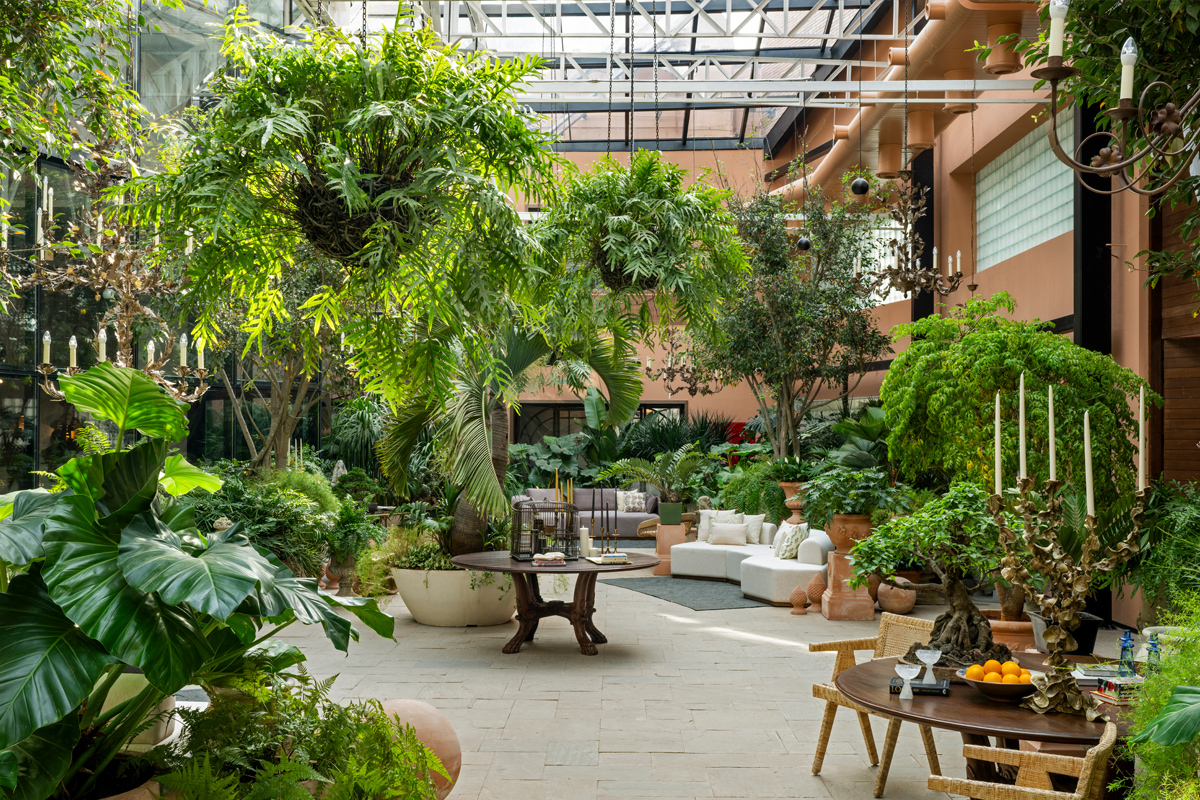
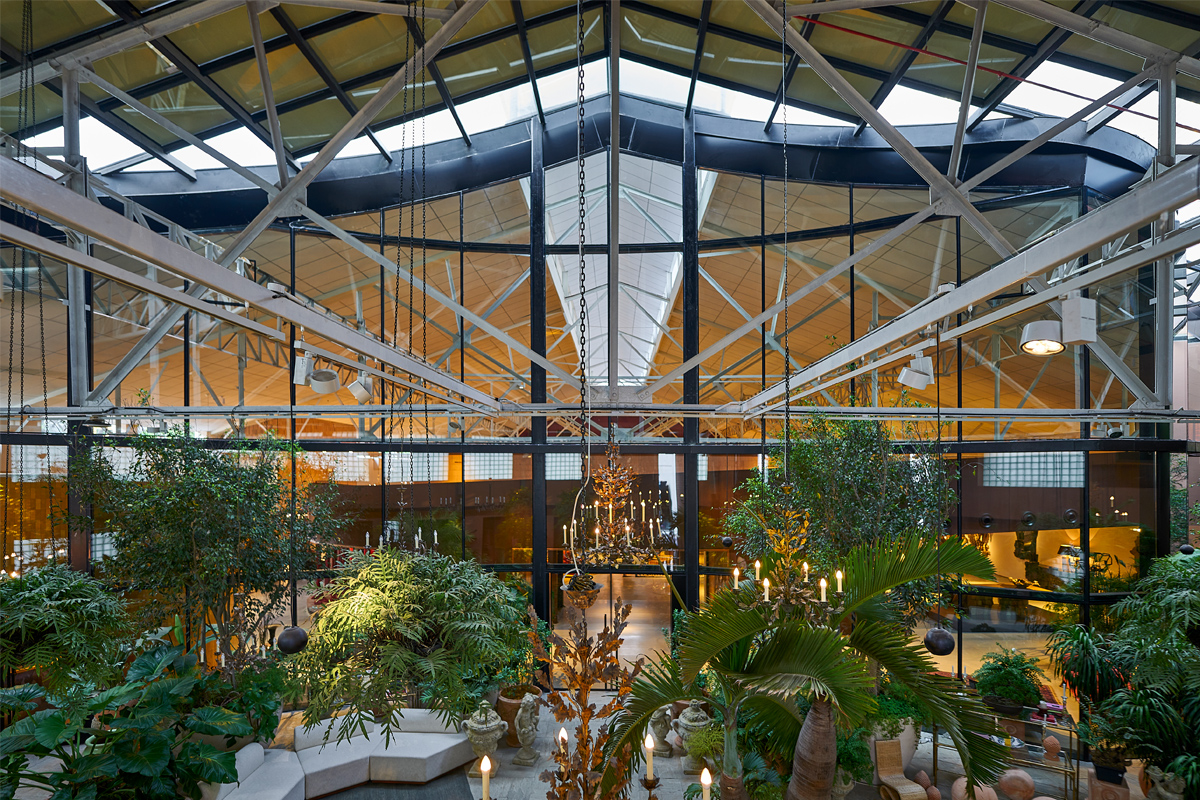
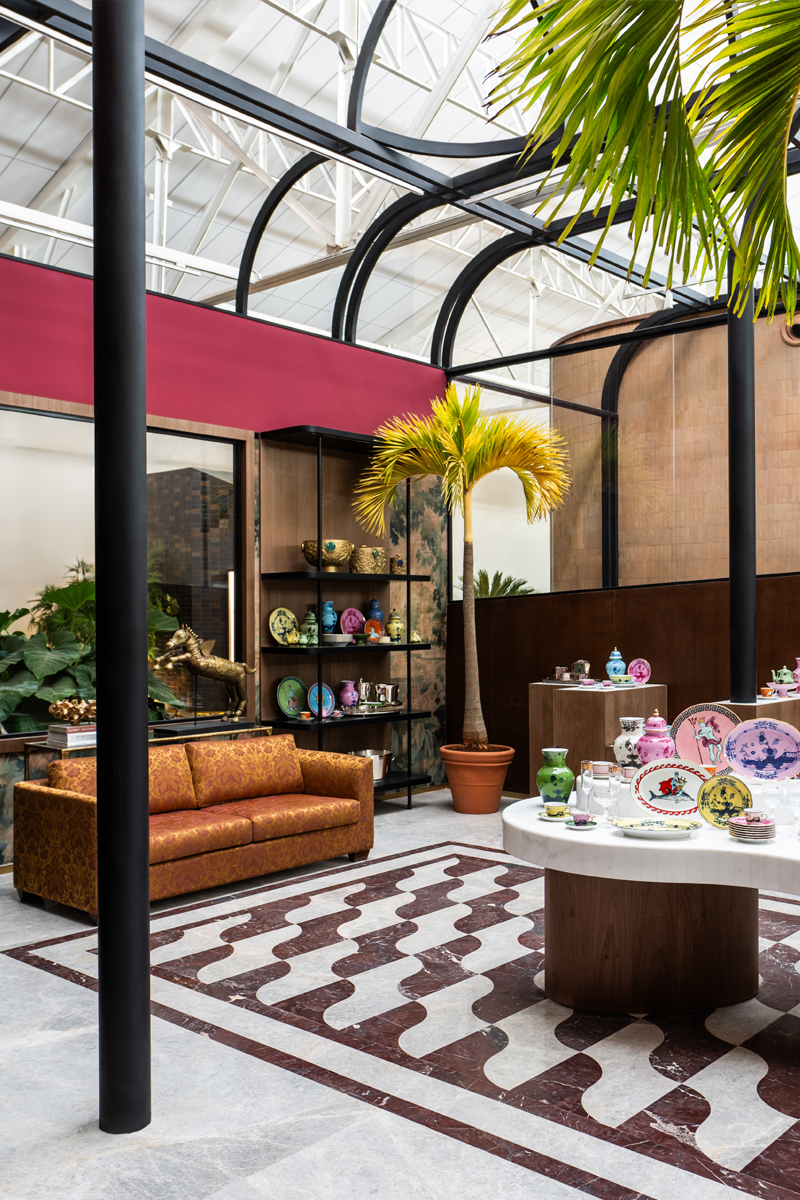
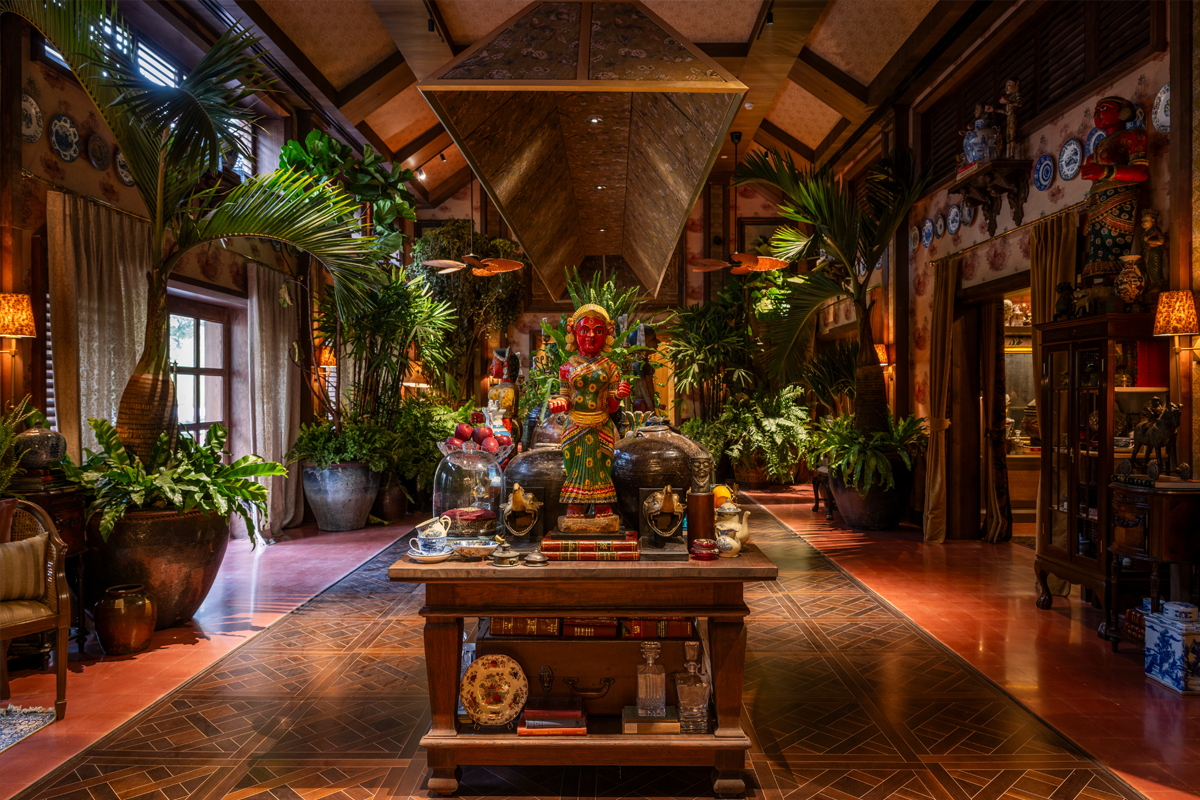
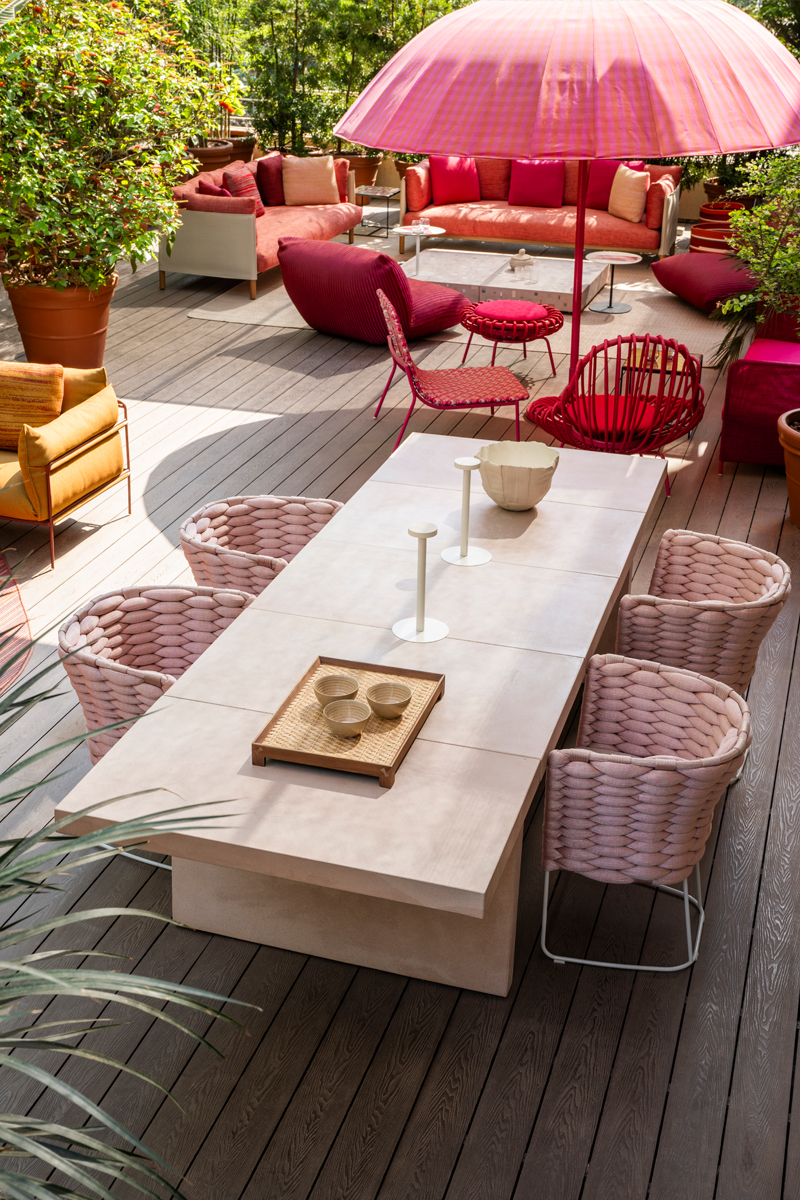
Upon entry, one is first greeted by a massive conservatory or the Orangerie, as we call it, with a skylit roof allowing in an abundance of natural light. Gardens and greenery have becoming a scarce luxury amidst the city’s increasingly concrete urban landscape, and this setting serves to uplift visitors with its serene backdrop.
A flexible space intended as an extension to one of three restaurants that are to shortly open their doors, the Orangerie also doubles up as a plant retail section, and can be utilised as an extension of the gallery or for private events.
The Ramp and Galleries
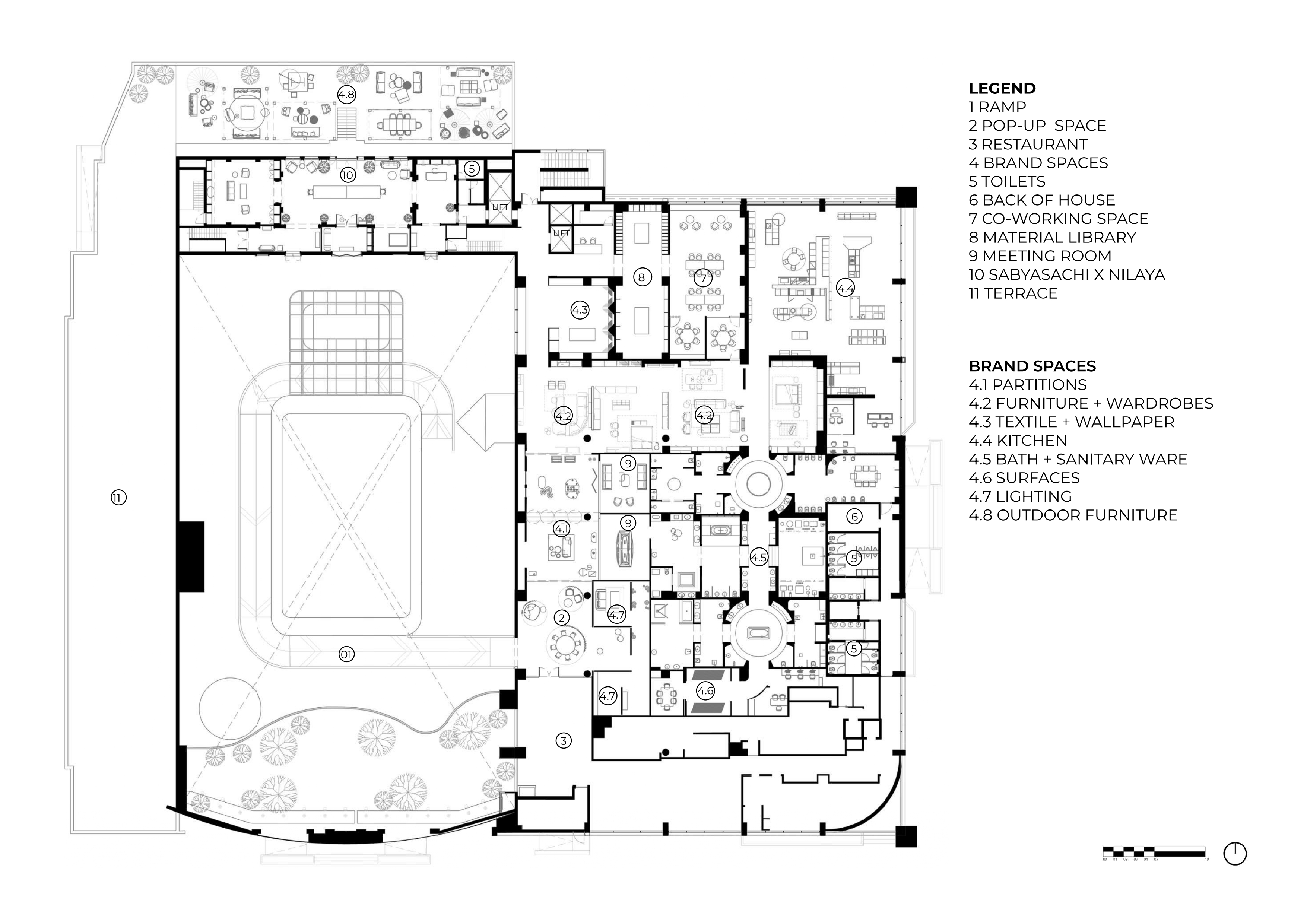
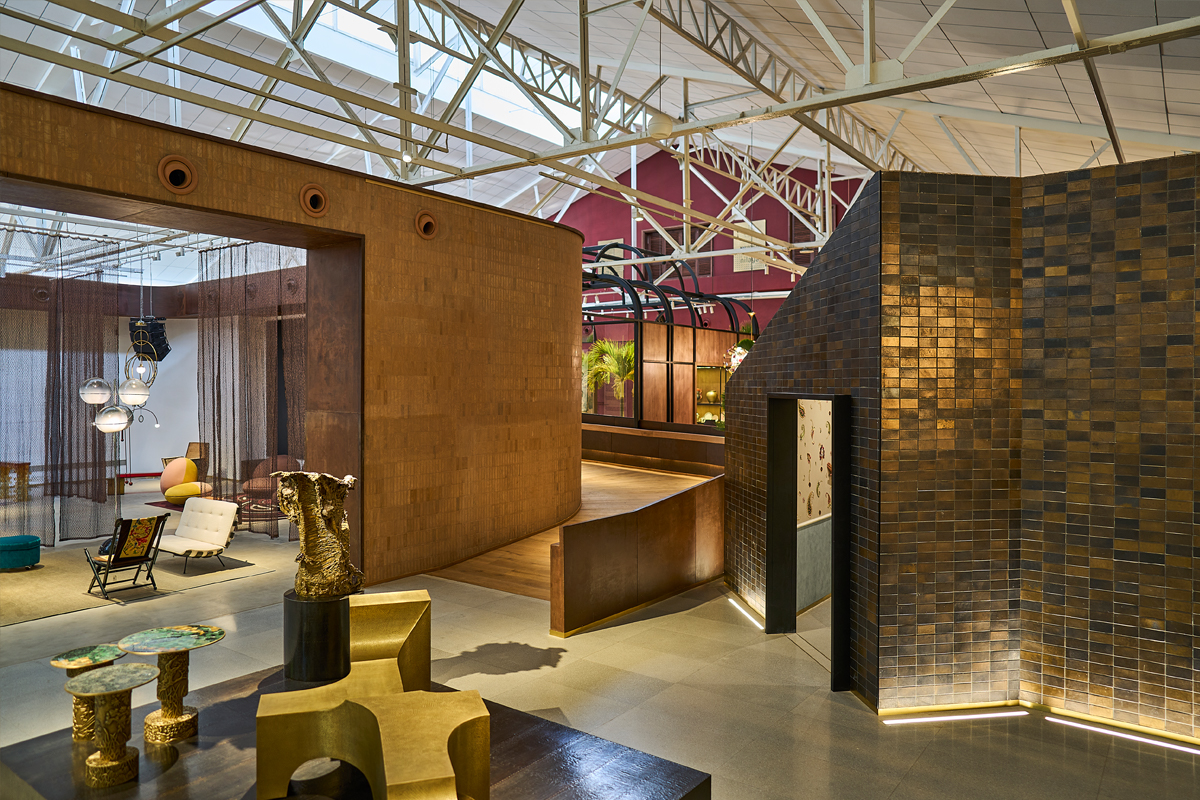
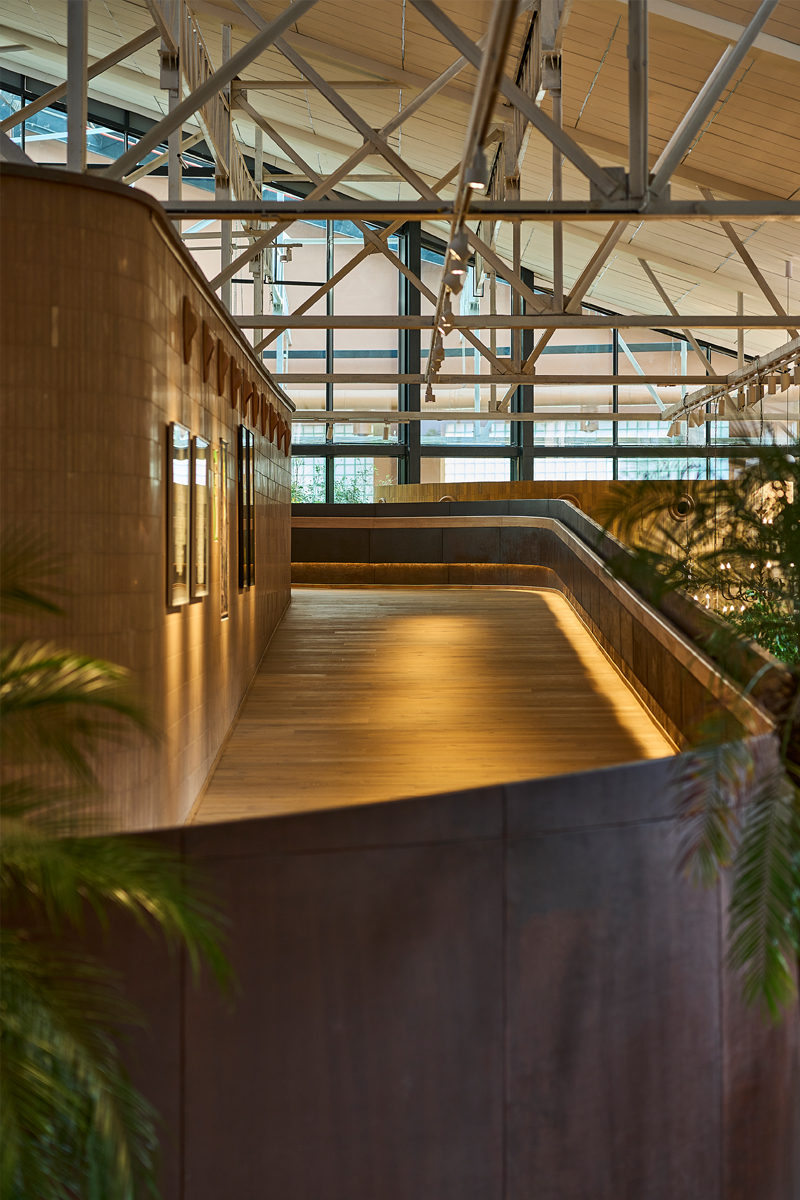
A key challenge while working on the project was to ensure a harmonious flow between the the two clearly defined structures that are its ‘heart’ and ‘mind’, while preserving the grandeur of the volumes. The solution came in the form of the ramp -- an architectural element that not only bridges the two buildings, but also connects them thematically.
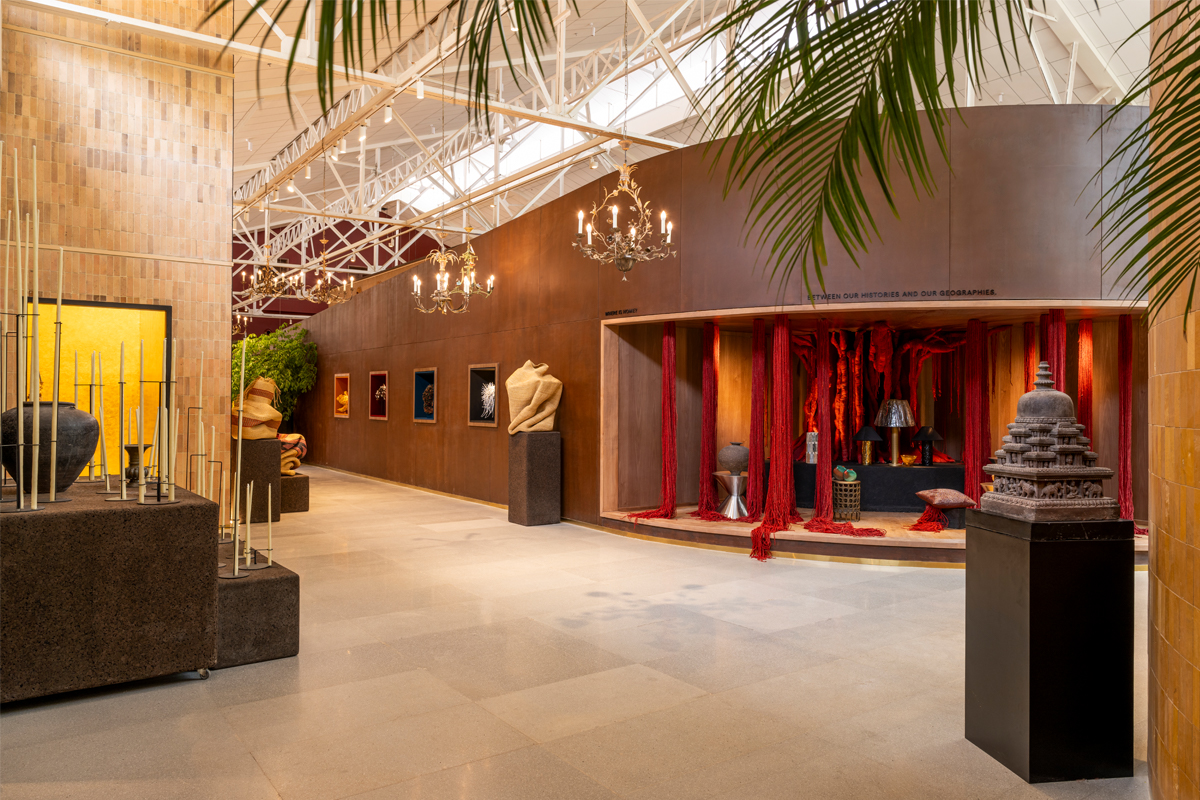
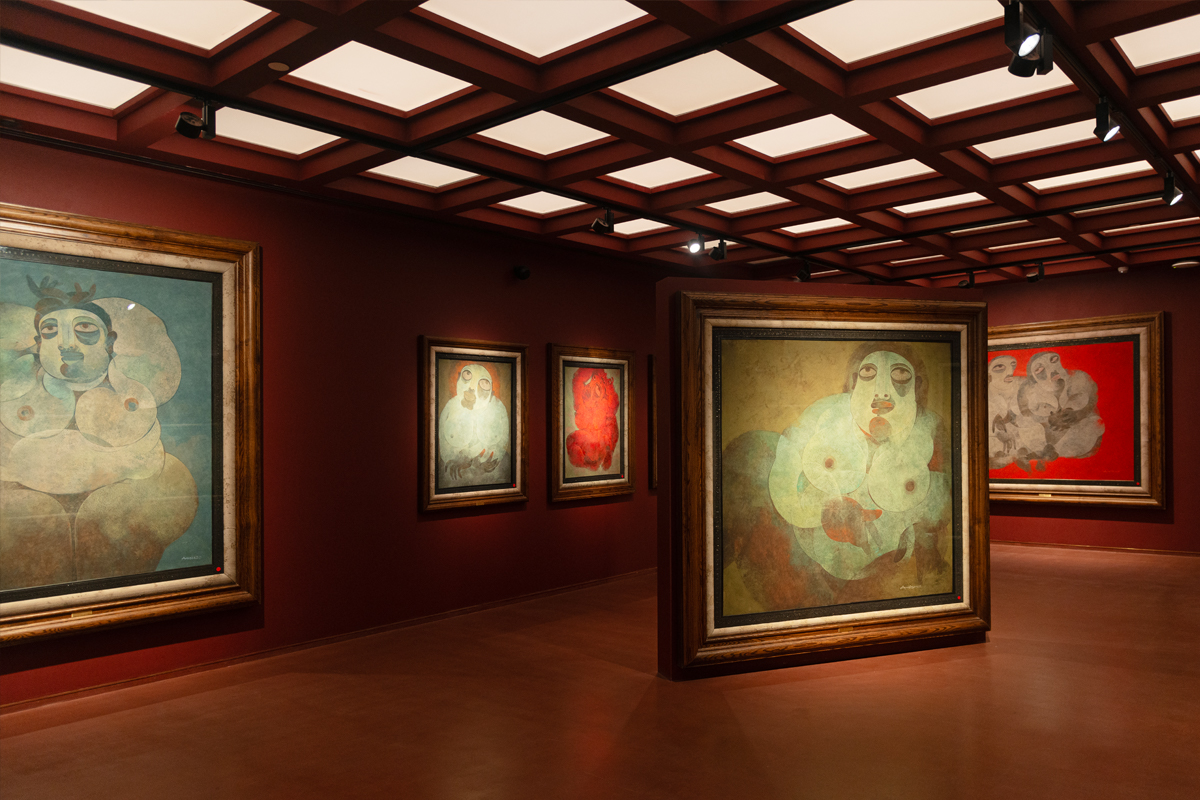
"A ramp is not just a means of movement; it is a promenade architecturale, guiding the observer through a dynamic spatial journey," as envisioned by Le Corbusier. At Nilaya, it acts as a promenade, guiding visitors through the experience and segregating three different galleries, while simultaneously maintaining an openness that the scale of the space demands. Gallery One is ensconced by the ramp on all sides, intended as a multipurpose space; Gallery Two runs parallel to it on the right, while Gallery Three at the apex end is where photography exhibits and curated collections unfold.
Wrapped in cotton steel, the inner side is clad with over 20,000 handmade terracotta coloured ceramic tiles. The ramp transcends its primary function of circulation, evolving into an integrated architectural spine that conceals essential services, carves out pockets of curated display beneath, and orchestrates a dynamic spatial gallery, transforming movement into an immersive experience of space, light, and content. It therefore serves a dual purpose: it connects the buildings physically, while also acting as a gallery in its own right, offering a series of different exhibitions on both sides.
The Shop House
The Shop House at Nilaya serves as a space dedicated to curated objects from both homegrown and international brands. The section encourages impulse exploration, allowing visitors to wander through a host of accessories and artifacts.
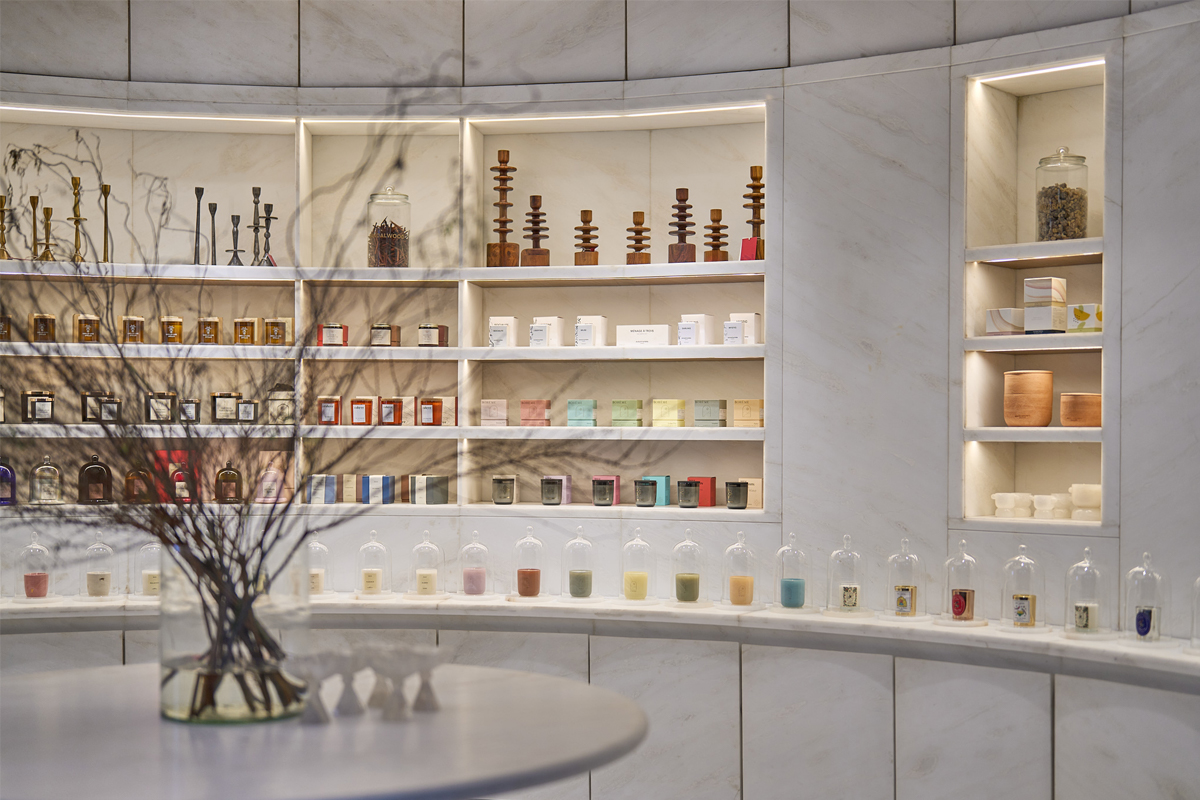
The journey begins just beyond the conservatory, with the Candle Library. Clad entirely in white marble, the stark palette allows the products, sourced both locally and from across the world, to take centrestage, heightening both the visual and olfactory experience.
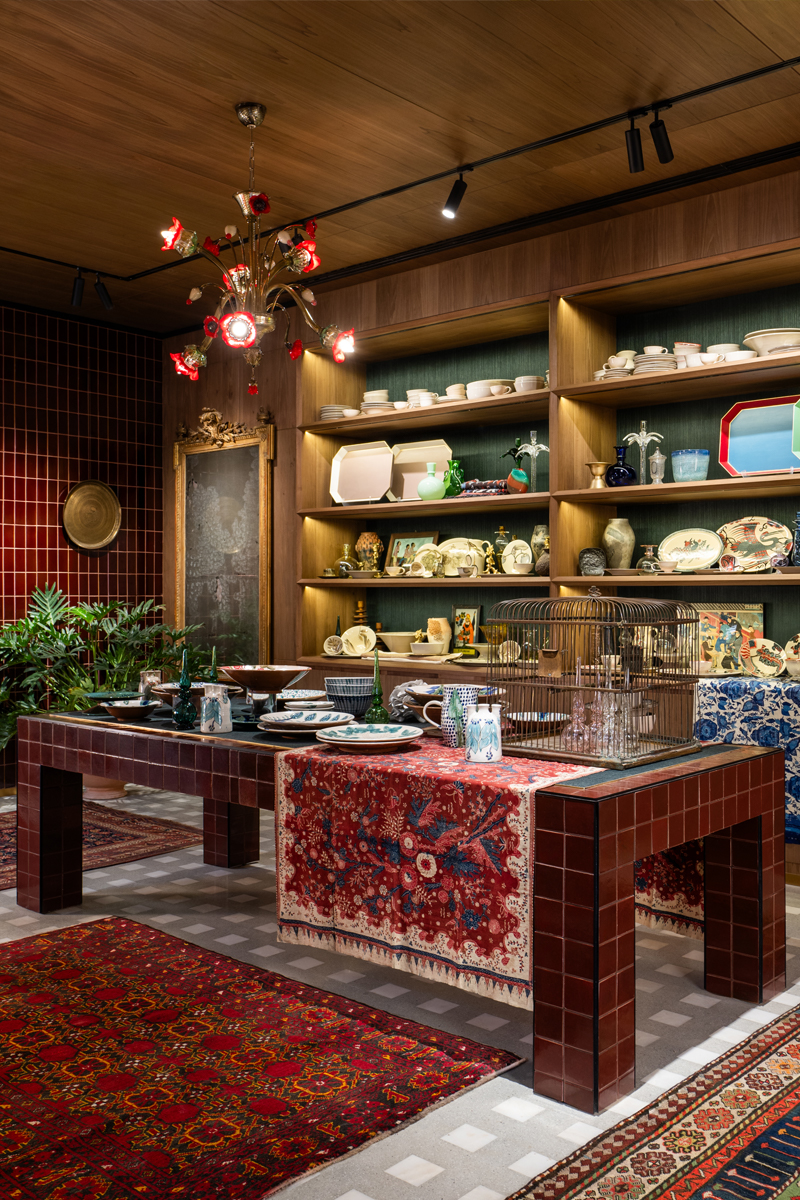
Taking a cue from the brief, which included tableware, barware, antiques, textiles and soft furnishing displays, our programmatic response was to delineate the Shop House into a series of distinct zones. The first of these is akin to a Cabinet of Curiosities — a space for larger, statement pieces where each object resides in its own niche. Moving forward, one encounters the dining section with its tableware and crockery; at its centre stands a display table constructed from handmade terracotta tiles in burgundy.
Barware is housed in a dedicated section where each piece is underlit in order to make its mark. This section then leads into the Shop House’s follies, or architectural vestibules. Each has an exterior clad with different kinds of tile -- handmade in terracotta, or ceramic in different colours. We wanted a strong palette of colour on the exterior; inside, each serves as a distinct room for different collections and creates an immersive environment where curators can create hyper-styled settings, a self-contained vignette giving the space a sense of discovery and intimacy.
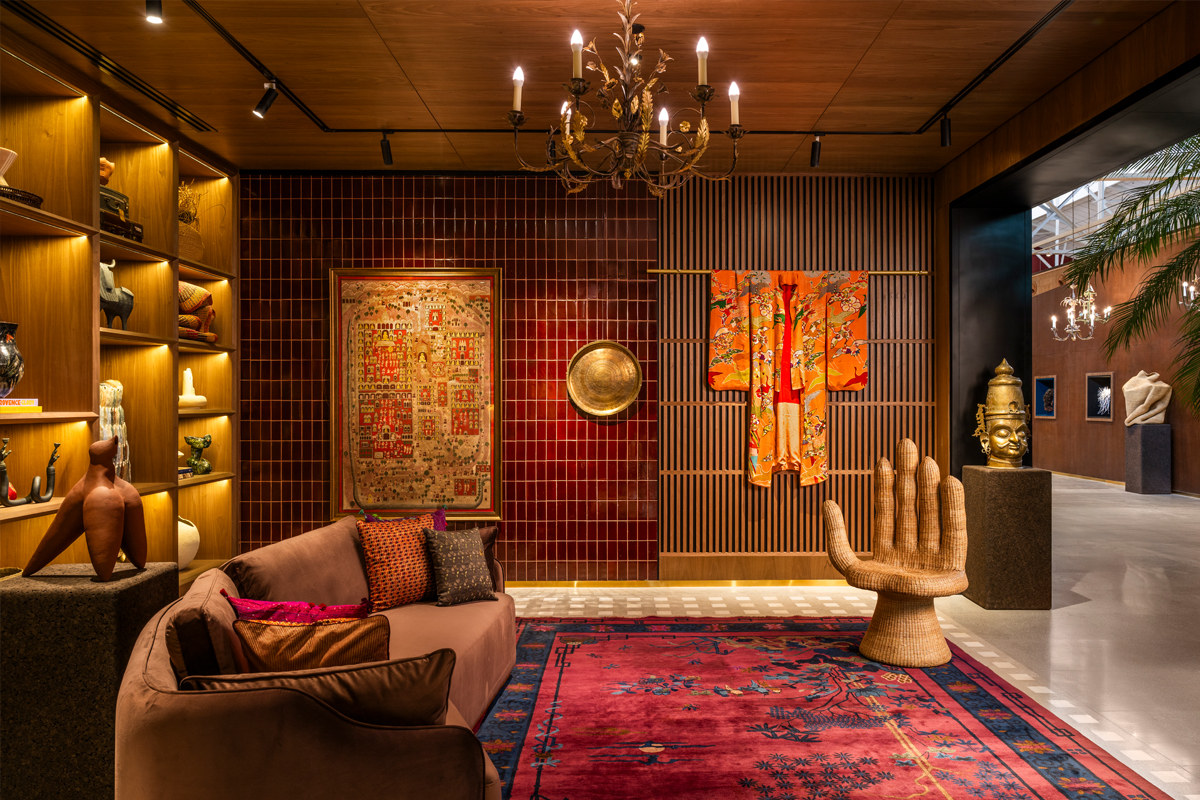
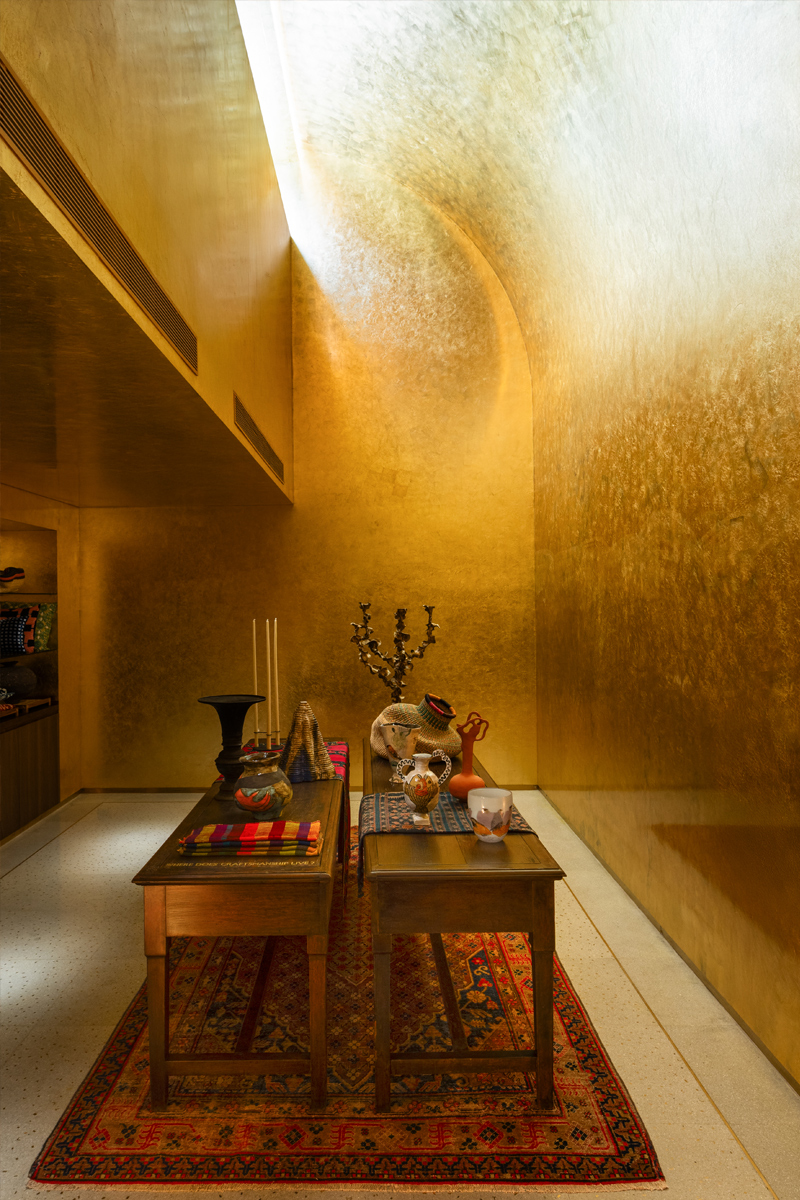
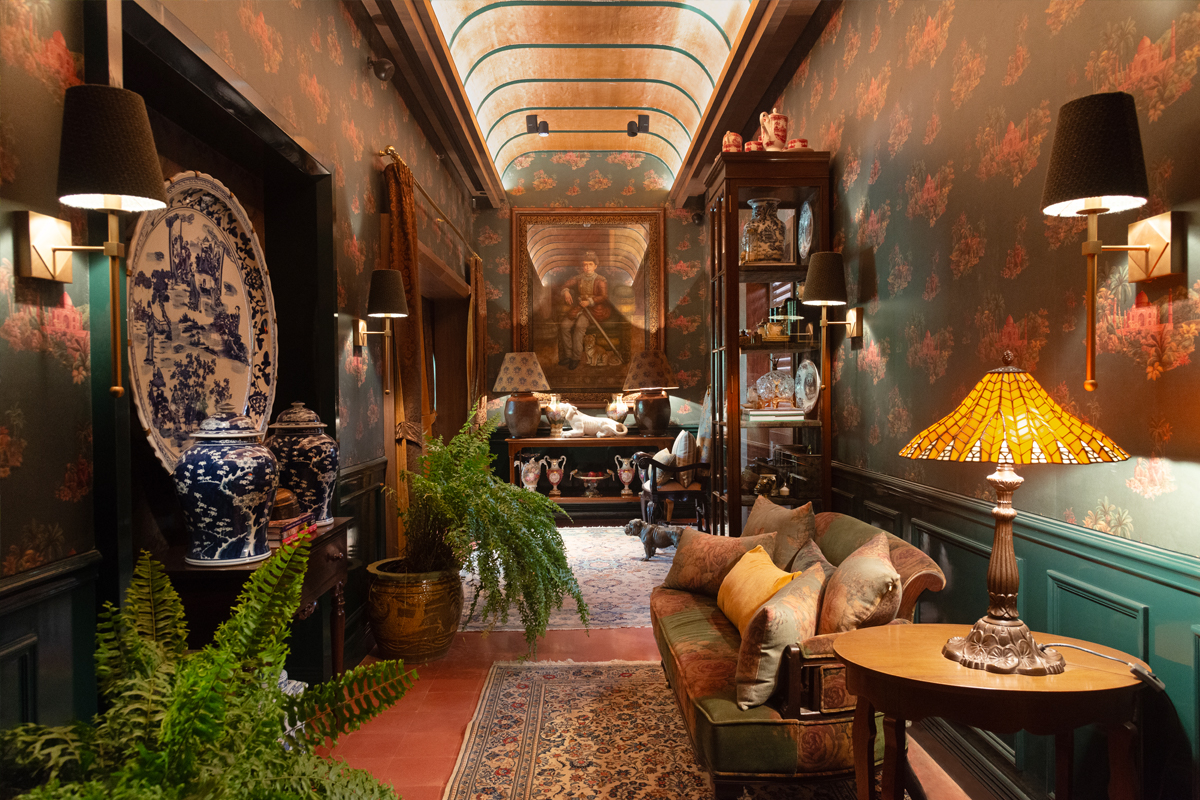
Next comes a vaulted, gold-hued chamber conceived as a space for antiques. Natural light filters through, animating the room’s custom terrazzo flooring embedded with golden chips, while the walls and ceiling are clad in gold foil.
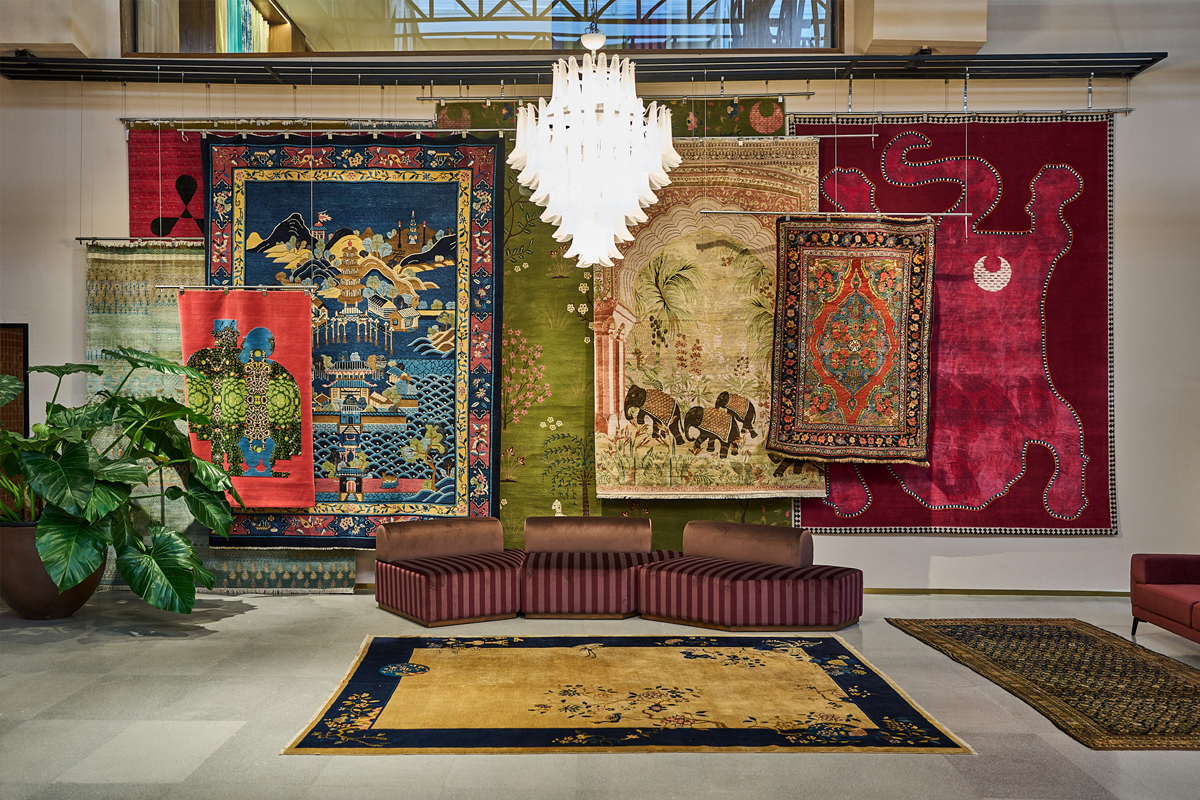
The final segment is devoted to textiles — cushions, hanging fabrics, and soft accessories. Here, terracotta tiles in a white finish serve as a neutral counterpoint, allowing the richness of the textiles to take center stage. Each alcove within this section was crafted with precision, ensuring that every object is adequately highlighted.
The material palette across the Shop House is consistent yet varied — custom terrazzo, richly grained wood, and handmade terracotta tiles, with hues of deep burgundy and warm neutrals creating a cohesive backdrop.
The Mind
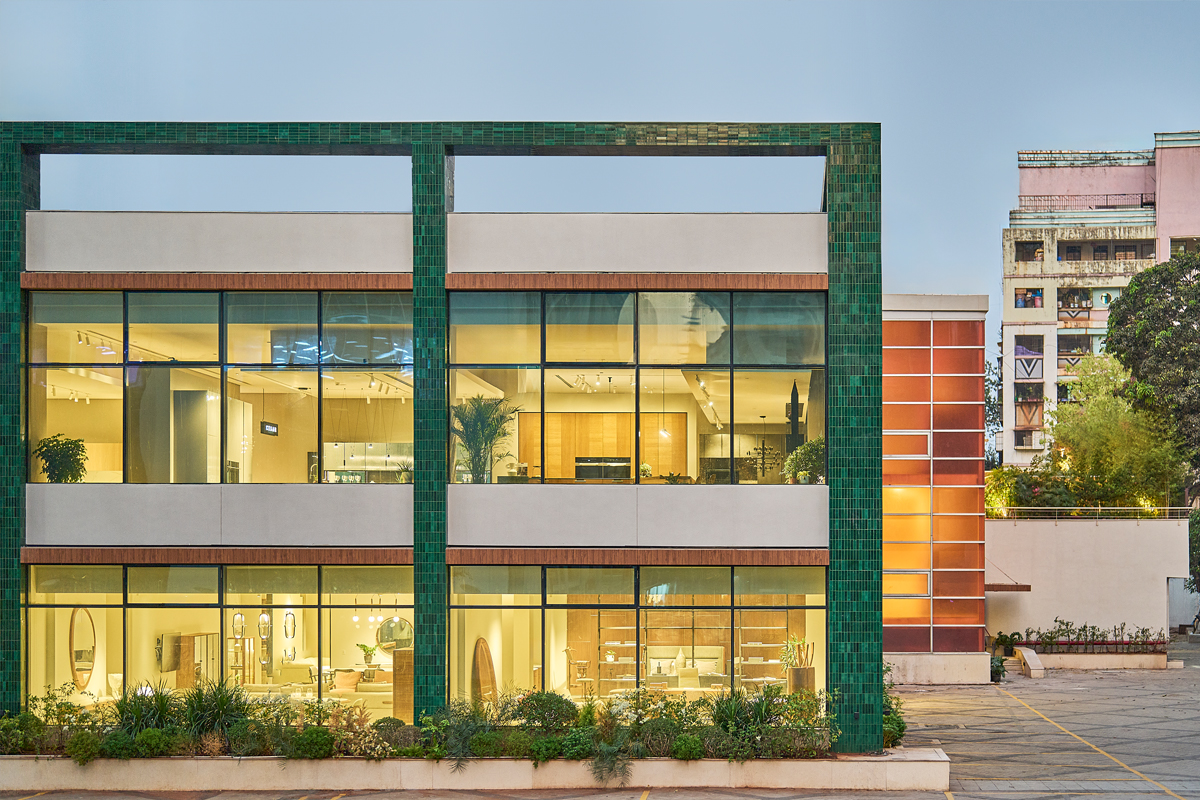
The ‘mind’ at Nilaya is a ground-plus-one structure, conceived to offer an immersive retail experience.
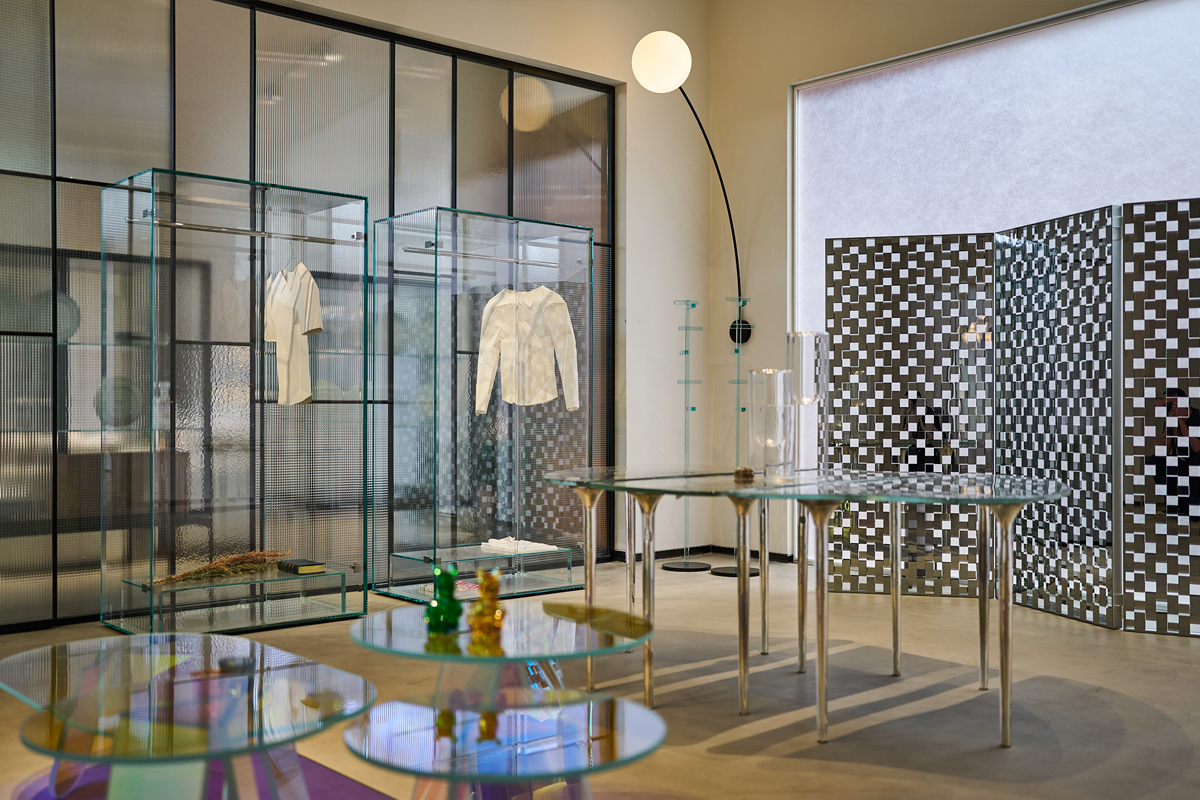
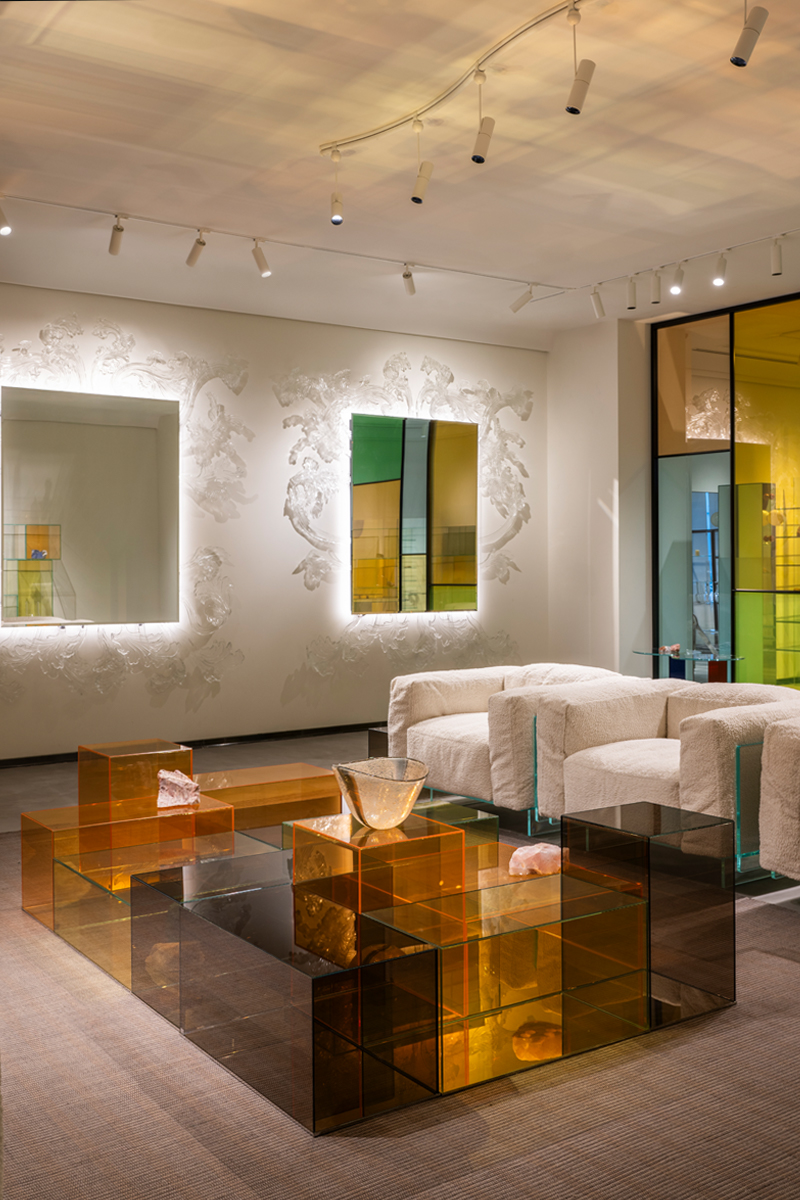
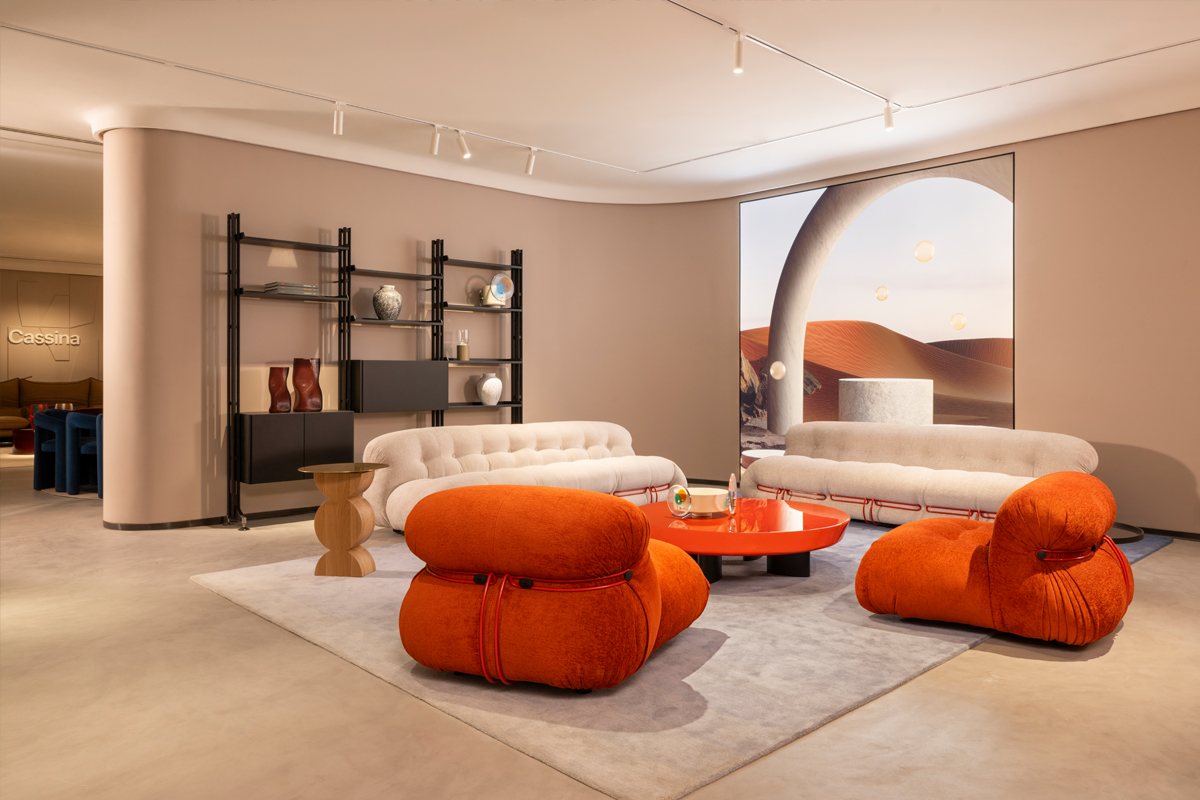
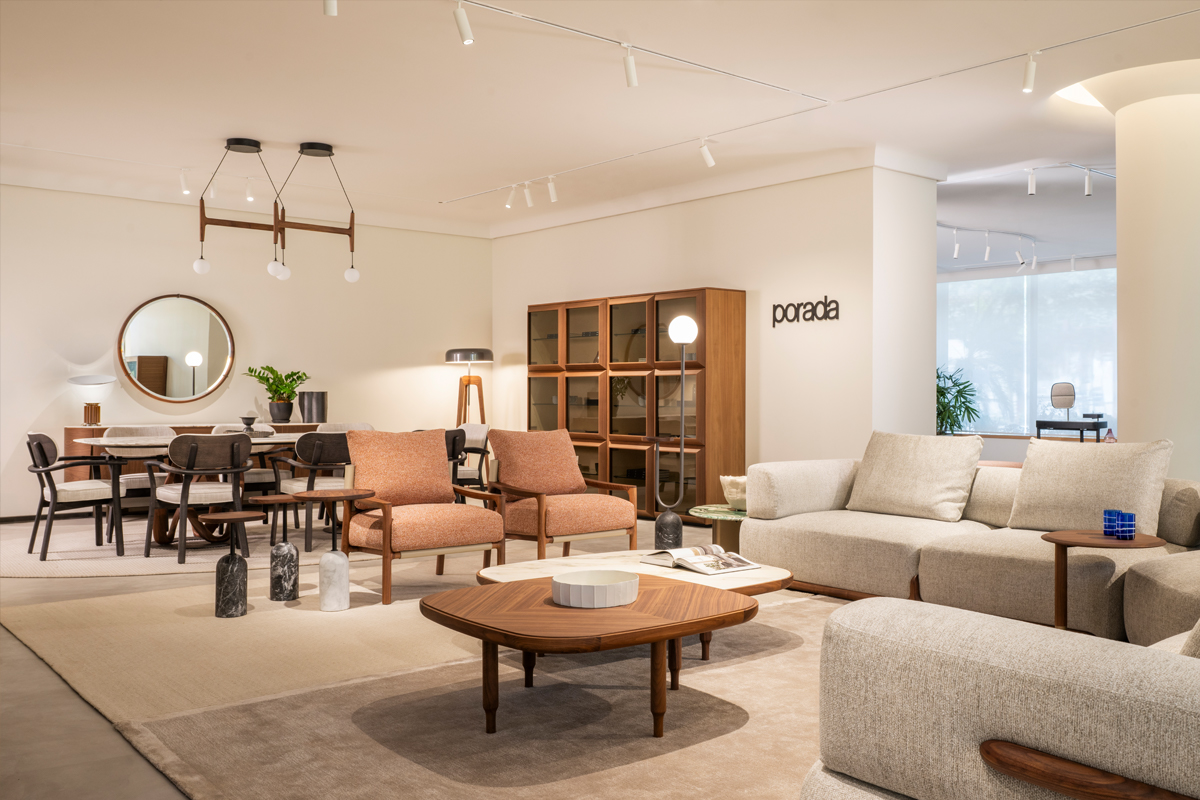
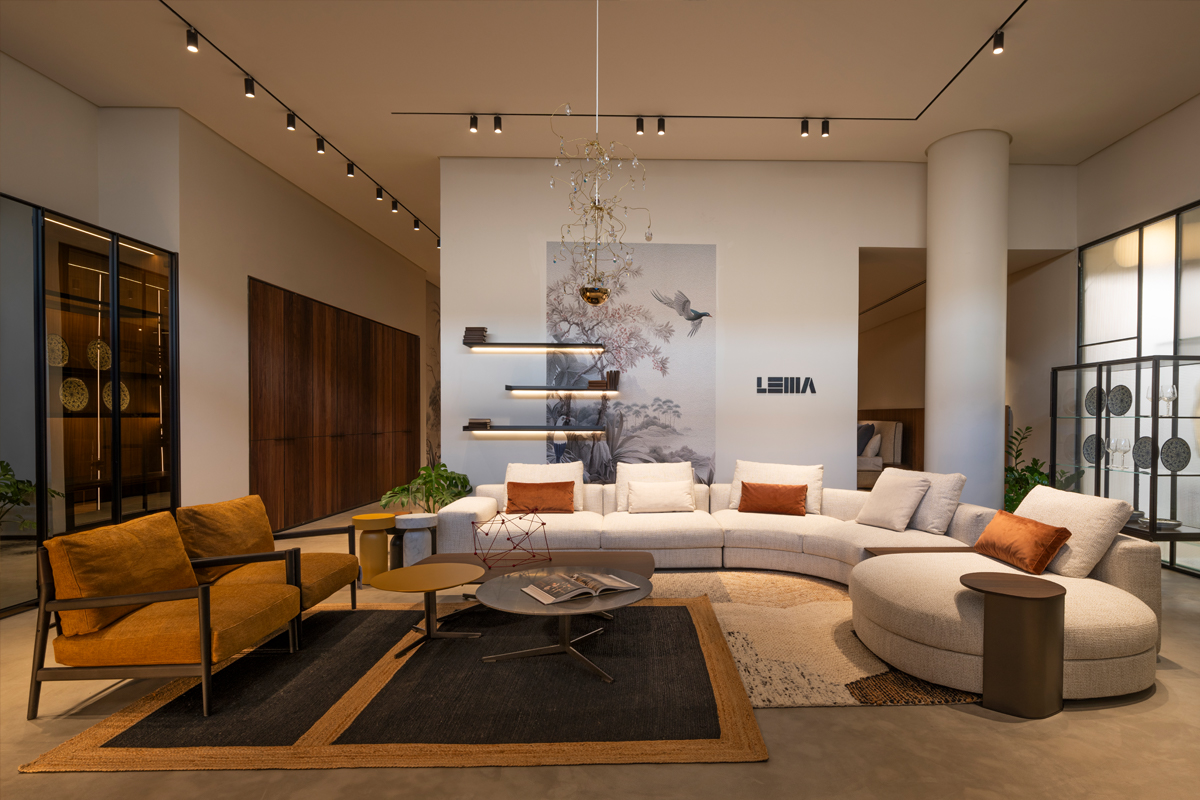
The lower level features a mix of international furniture brands — primarily Italian, but also Danish, Japanese, and others. Despite the diversity of design philosophies inherent to each, we wanted to achieve a coherent aesthetic, which required individual collaborations with each of them, adapting their personal mandates to create a homogeneous framework encapsulating all the collections.
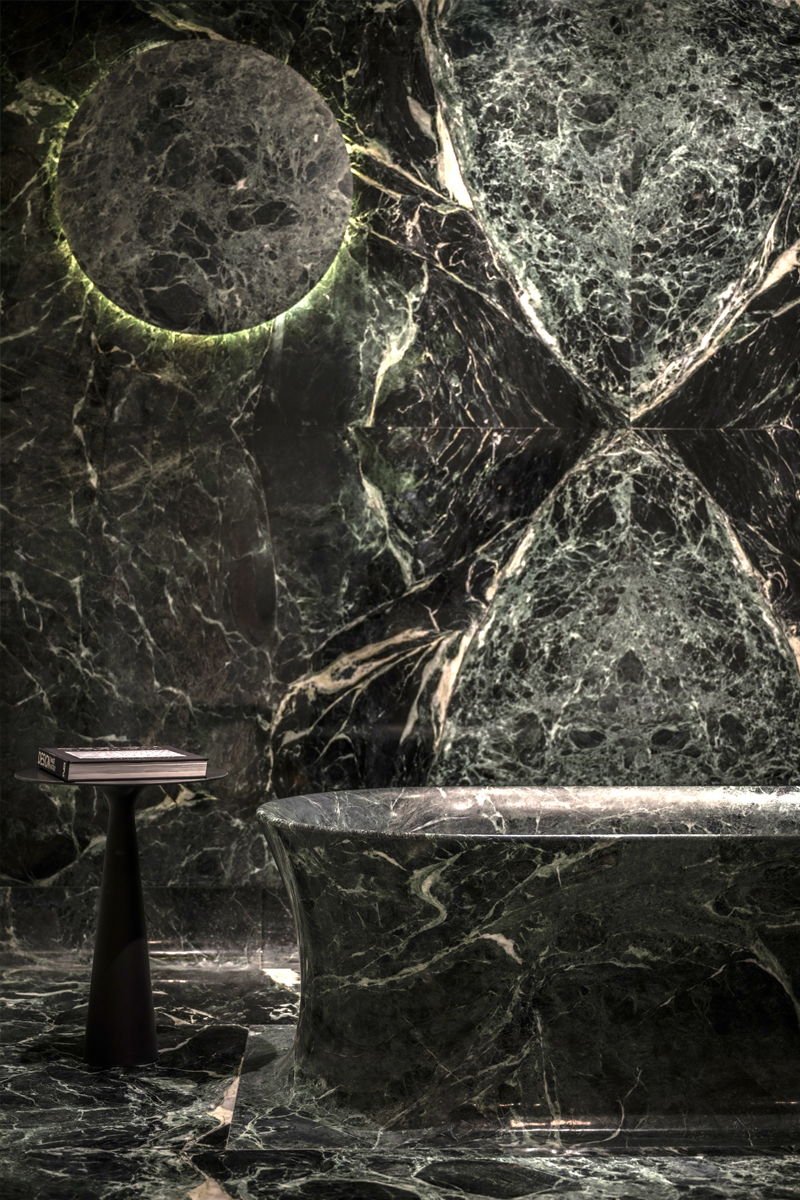
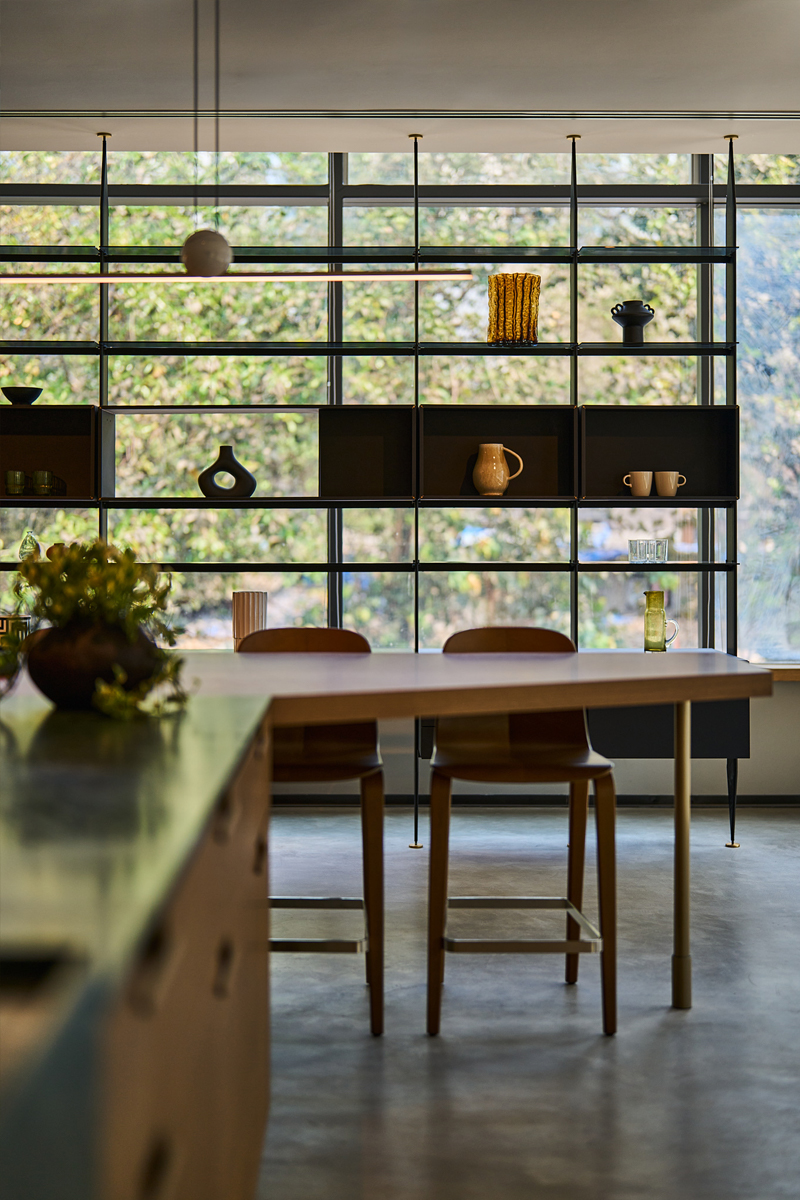
The upper level takes on more of a residential characteristic, focusing on kitchens, wardrobes, bathrooms and surface finishes such as tiles, mosaic and stone. In areas like the bathroom section, where multiple brands are represented, we chose not to follow the typical showroom practice of lining up products in succession. Instead, we created a series of enclosed cubicles, each offering a completely stylised environment that allows visitors to experience the products in a more personal manner.
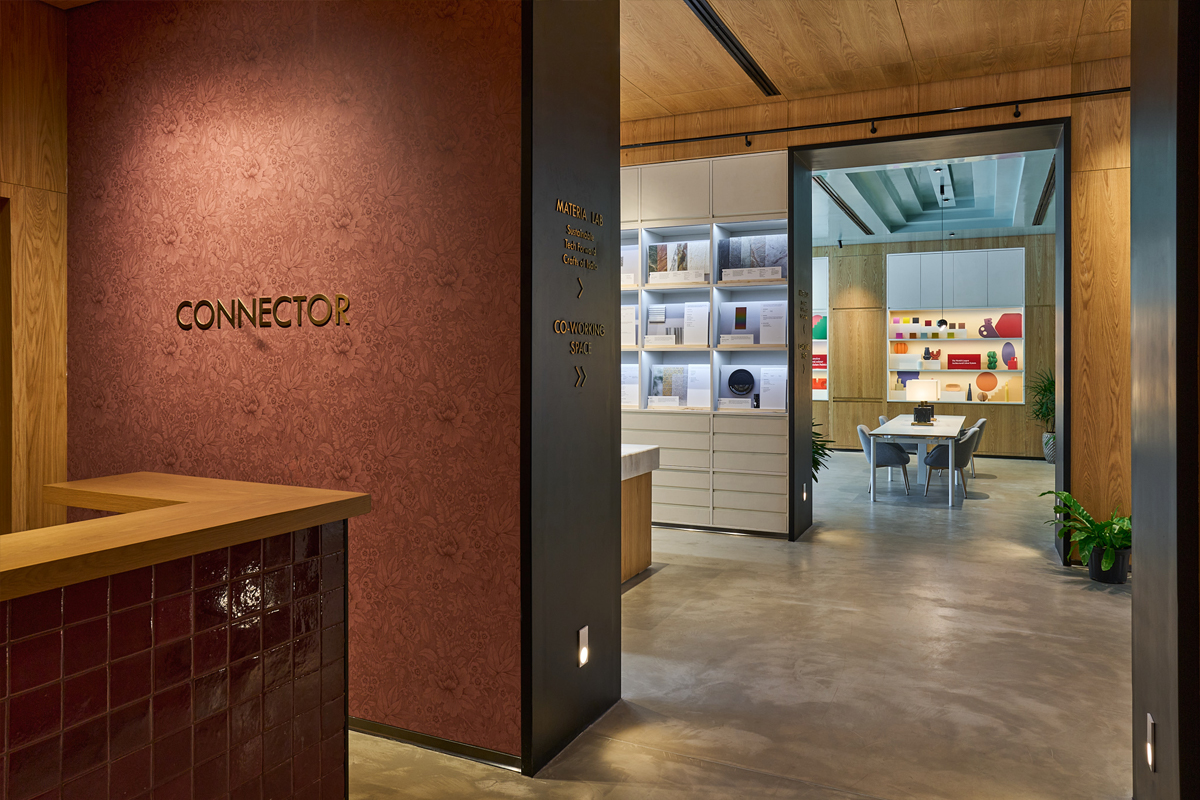
Across both levels of the ‘mind’, the design intention was to move away from the conventional shop-by-shop format. We opted for a more fluid layout, allowing free movement between the rooms. This makes for a museum-like experience, where each space unfolds naturally into the next. The aim was to encourage discovery, while maintaining a sense of spatial continuity throughout.